
BANK BULLIES BEWARE — Breaking the Cycle of Illegal Debt Harassment in California
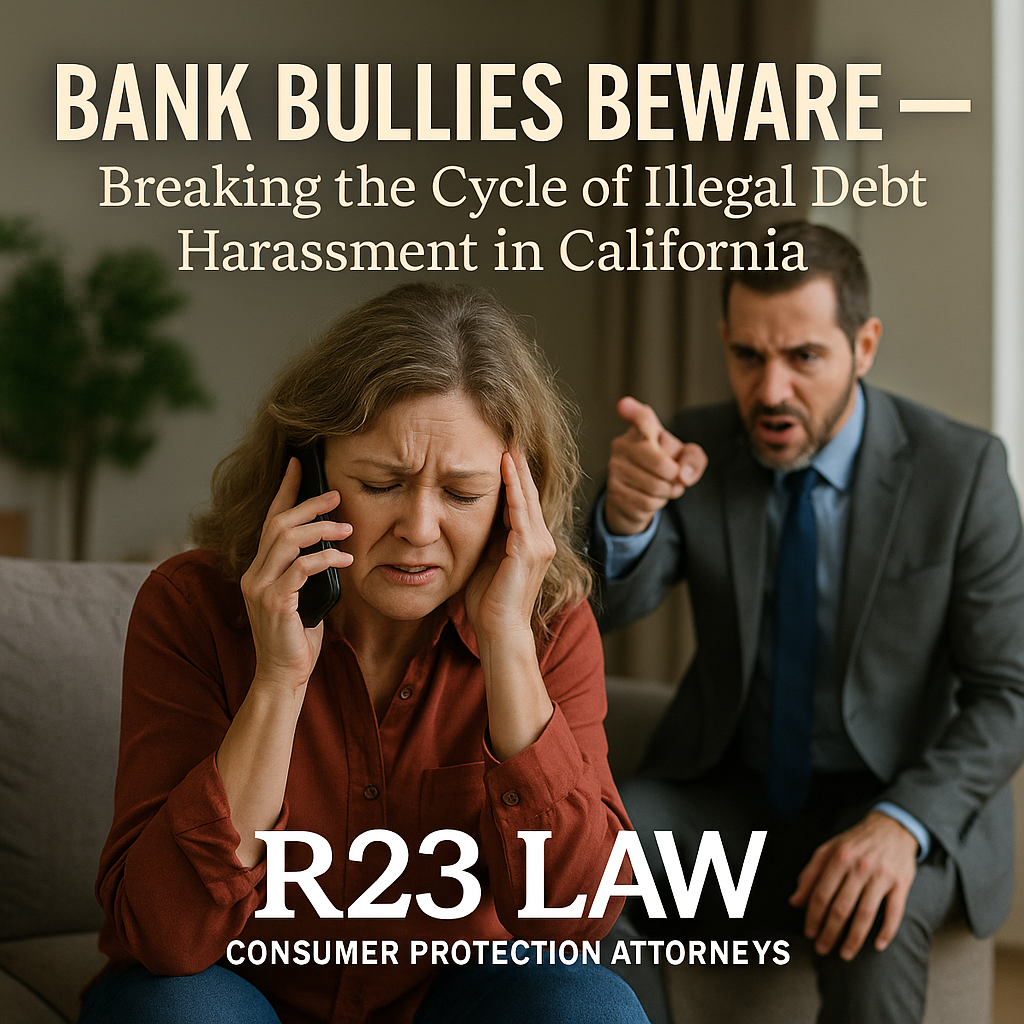
Bank harassment tactics like illegal robocalls and wage threats violate federal law
Discover how R23 Law’s California Consumer Protection Attorneys help clients fight back and recover thousands in compensation.
Relentless Bank Harassment Is More Than Annoying—It’s Illegal
Aggressive banks and their debt collection agents are increasingly resorting to unlawful harassment tactics—including robocalls, wage garnishment threats, and third-party disclosures—to pressure consumers into repayment. But here’s the truth: you don’t have to tolerate it, and you may be entitled to significant financial compensation under federal law.
At R23 Law, our California Consumer Protection Attorneys routinely help clients stop this harassment, assert their legal rights, and recover damages under powerful statutes like the Fair Debt Collection Practices Act (FDCPA) and the Telephone Consumer Protection Act (TCPA).
What Bank Harassment Really Looks Like
Bank harassment often includes:
Calls outside legal hours (before 8 AM or after 9 PM)
Threats of wage garnishment or property seizure without legal authority
Robocalls without consent
Contacting your employer, neighbors, or family
Failing to identify as a debt collector or lying about their authority
As seen in the infographic on page 2, these are not just shady tactics—they are direct violations of federal consumer protection laws.
The Financial Fallout: More Than Just Stress
Bank harassment is designed to wear consumers down. These tactics can:
Pressure people into paying debts they don't owe
Lead to unauthorized deductions and fees
Trigger long-term credit damage
Cause consumers to miss important mail or financial notices
The emotional toll is real—but so is the legal recourse available to you.
Federal Laws That Protect You
The FDCPA and TCPA give consumers powerful protections:
Up to $1,000 per FDCPA violation, even without financial harm
Between $500 and $1,500 per illegal robocall or automated message
Mandatory reimbursement of attorney fees for successful claims
The summary on page 6 shows how these penalties quickly add up, with some clients recovering $15,000 or more when banks repeatedly violate the law.
Document Everything: Evidence Increases Win Rates by 40%
Per the data visual on page 4, documented evidence boosts resolution success rates by 40%. Start by:
Recording call details (date, time, content, caller name)
Saving voicemails, texts, and mailed communications
Taking screenshots of caller ID and robocalls
Writing down any third-party disclosures
This paper trail creates leverage when filing complaints or lawsuits.
Strategic Actions to Build Your Case
To protect your rights, follow these key legal strategies:
Send cease and desist letters via certified mail
File complaints with the Consumer Financial Protection Bureau (CFPB) and your state attorney general
Retain legal counsel to file lawsuits if violations continue
These steps create pressure that banks cannot ignore—and force them into compliance.
Why R23 Law Is Your Advantage Against Harassing Banks
Our attorneys have a proven track record of turning evidence into compensation. We:
File regulatory complaints to trigger internal investigations
Seek maximum penalties per violation
Force banks to pay your legal fees
Settle most cases within 90 days when evidence is strong
Maximum Compensation. Zero Upfront Cost.
At R23 Law, we don’t charge you unless we win. With potential FDCPA and TCPA damages reaching tens of thousands of dollars, it pays to fight back with experienced consumer protection counsel by your side.
Final Thought: You Deserve to Be Left Alone—and Compensated
Harassing debt collection is not just unethical. It’s illegal. And R23 Law’s California Consumer Protection Attorneys are ready to fight for your peace of mind—and your compensation.
If you're receiving robocalls, threats, or pressure from a bank or collection agent, don’t wait. Contact us today for a free, confidential consultation.
Let us stop the harassment—and make them pay for it.
